Цепочка обязанностей
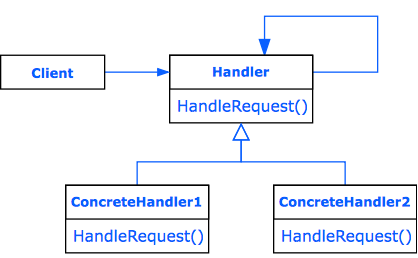
;; Chain of responsibility folds into a sequence of handlers walked by some:
;; the chain stops at the first one that answers, with no next pointers
;; Handlers - each knows its code and what to do
(def rescuers
[{:code 1 :to-help #(println "call firefighters")}
{:code 2 :to-help #(println "call the police")}
{:code 3 :to-help #(println "call an ambulance")}])
;; HandleRequest()
(defn help [code]
(or (some (fn [r]
(when (= code (:code r))
((:to-help r))
true))
rescuers)
(println "nobody handles code" code)))
(help 1) ; call firefighters
(help 3) ; call an ambulance
(help 9) ; nobody handles code 9 - the chain ran out
Можно избежать жесткой зависимости отправителя запроса от его получателя, при этом запросом начинает обрабатываться один из нескольких объектов. Объекты-получатели связываются в цепочку, и запрос передается по цепочке, пока какой-то объект его не обработает.Read moreЗадача. В службу поддержки приходят запросы разного масштаба. Мелкий идёт к помощнику, покрупнее - к менеджеру, совсем крупный - к директору. Если бы код, который отправляет запрос, сам выбирал получателя, ему пришлось бы знать каждого получателя и каждое правило. Каждый новый получатель требовал бы правки в отправителе. Идея. Получатели, их называют обработчиками, выстроены в заданном порядке: это и есть цепочка. Отправитель отдаёт запрос только первому обработчику. Каждый обработчик проверяет, его ли это запрос. Если его, обработчик делает работу, и дальше запрос не идёт. Если нет, обработчик передаёт запрос следующему. Отправитель не знает, какой обработчик ответит и ответит ли кто-нибудь вообще. Как читать пример. Несколько обработчиков соединены в цепочку. Каждый по своему правилу решает, его ли это запрос. Клиентский код отправляет несколько запросов, всегда в начало цепочки. Каждый запрос движется по цепочке, пока какой-нибудь обработчик его не примет. В большинстве языков каждый обработчик хранит ссылку на следующий; в некоторых цепочка - простой список, который проверяют по порядку. Некоторые примеры отправляют ещё и запрос, который не принимает ни один обработчик, и вывод об этом сообщает. Когда применять. Цепочка нужна, когда запрос могут обработать несколько объектов, а их набор или порядок может меняться. Если получатель всегда один и тот же, она ни к чему: прямой вызов проще и понятнее. Частая ошибка. Забыть о конце цепочки. Тогда запрос, который не принял ни один обработчик, пропадает без единого сообщения. Нужно решить, что происходит в конце: ошибка, обработчик по умолчанию или внятное сообщение. |