原型
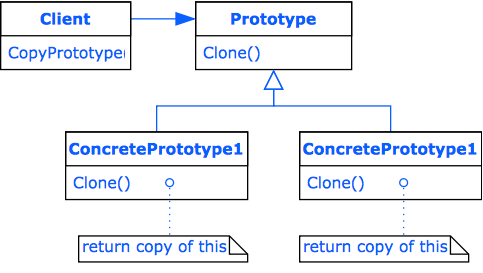
//Prototype: a pointer to a function plays the virtual clone()
typedef struct Shape {
const char *color;
struct Shape *(*clone)(const struct Shape *self);
} Shape;
//ConcretePrototype: the base struct is the first field
typedef struct {
Shape base;
} Square;
//only the concrete type knows its size, so it makes the copy;
//assigning a struct copies all its fields
Shape *squareClone(const Shape *self) {
Square *copy = malloc(sizeof *copy);
*copy = *(const Square *)self;
return ©->base;
}
//Client
typedef struct {
const Shape *shape;
} ShapeMaker;
Shape *makeShape(const ShapeMaker *maker) {
return maker->shape->clone(maker->shape);
}
Square square = {{"Red", squareClone}};
ShapeMaker maker = {&square.base};
Shape *square1 = makeShape(&maker);
Square *square2 = (Square *)makeShape(&maker);
//square1->color is "Red"
//square2->base.color is "Red"
bool same = square1 == &square2->base;
//same is false: each call makes a new copy
printf("color1 is %s\n", square1->color);
printf("color2 is %s\n", square2->base.color);
printf("same is %s\n", same ? "true" : "false");
free(square1);
free(square2);
Specify the kinds of objects to create using a prototypical instance, and create new objectsby copying this prototype.Read more问题。绘图程序有一个现成图形的调色板,每个图形都有自己的颜色、大小和边框。用户把图形拖到页面上时,程序必须生成一个与之完全相同的新图形。如果代码使用构造函数,就必须知道确切的类,并手动复制每一项设置。于是每增加一种图形,这段代码都要修改。 思路。原型是一个知道如何复制自己的现成对象。它有一个复制方法,通常叫作 clone。客户端保存一个原型,并向它索要副本。客户端不指明具体类,也不知道复制了哪些字段。副本最初拥有与原件相同的数据,此后两个对象彼此独立。 如何阅读示例。原型是一个带有一个值的图形,这个值例如颜色或边数。在大多数语言中,一个客户端对象保存一个原型,只通过向它索要副本来生成新图形。输出显示副本的值与原型相同。有些示例还表明,副本是一个独立的对象,或者修改副本不会改变原型。在值永不改变的语言中,什么也不复制:变体就是改动了一个字段的同一样本。 何时使用。当对象的准备工作代价高昂、又需要许多相似的对象时,使用原型模式。当要创建的类要到程序运行时才能确定时,它也有帮助。字段不多的简单对象不要使用它:构造函数更简单。 常见错误。只在基类中编写复制方法,使它总是创建基类对象。这样,具体原型的副本就丢失了自己的类。每个具体原型都必须创建自己类的对象。 |