Сущность
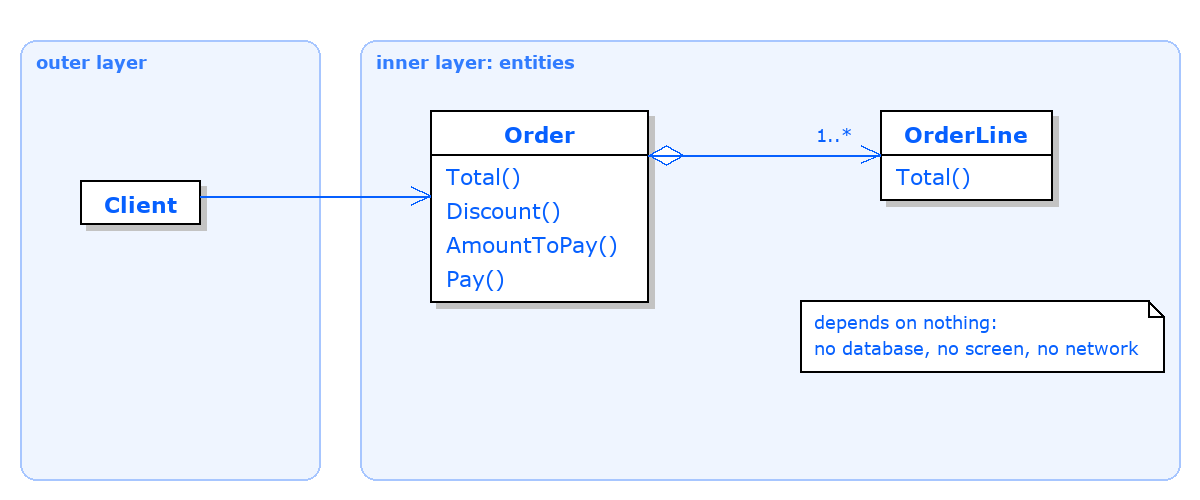
//entity
class OrderLine {
//what the line is about is read by everyone, so it
//is a plain field. price and count carry the rule
//checked above, and a name with # is a real lock:
//nothing outside the class body can even mention it
#price;
#count;
constructor(sku, price, count) {
if (count <= 0) {
throw new Error("bad count " + sku);
}
this.sku = sku;
this.#price = price;
this.#count = count;
}
cost() {
return this.#price * this.#count;
}
}
//entity
class Order {
//private in TypeScript is a word for the compiler
//and a cast drops it; # is a lock the language keeps
#lines = [];
#paid = false;
constructor(id) {
this.id = id;
}
add(sku, price, count) {
if (this.#paid) {
throw new Error("order is paid");
}
this.#lines.push(new OrderLine(sku, price, count));
return this;
}
//the goods leave as a frozen copy, so a caller who
//pushes into them changes nothing here
goods() {
return Object.freeze(this.#lines.slice());
}
size() {
return this.#lines.length;
}
total() {
let sum = 0;
for (let line of this.#lines) {
sum += line.cost();
}
return sum;
}
//business rule: 10% off from 200
discount() {
let total = this.total();
return total >= 200 ? Math.trunc(total / 10) : 0;
}
payable() {
return this.total() - this.discount();
}
//business rule: an empty order is never paid
pay() {
if (this.#lines.length === 0) {
throw new Error("empty order");
}
this.#paid = true;
return this;
}
paid() {
return this.#paid;
}
}
//client code
//no database and no screen anywhere above
let order = new Order(1001);
order.add("pen", 30, 2);
order.add("lamp", 190, 1);
console.log("order " + order.id);
console.log("lines " + order.size());
console.log("total " + order.total());
console.log("discount " + order.discount());
console.log("payable " + order.payable());
order.pay();
console.log("paid " + order.paid());
//the same rule on a smaller order
let small = new Order(1002);
small.add("pen", 30, 2);
console.log("small total " + small.total());
console.log("small discount " + small.discount());
//the copy handed out refuses a new line loudly, and
//the order keeps its two either way
let taken = order.goods();
console.log("copy holds " + taken[0].sku +
" and " + taken[1].sku);
try {
taken.push(new OrderLine("chair", 1, 1));
} catch (error) {
console.log("refused: " + error.name + " on the copy");
}
console.log("still " + order.size());
//every refusal comes from the rules themselves:
//no storage and no screen took part in them
try {
order.add("pen", 30, 1);
} catch (error) {
console.log("refused: " + error.message);
}
try {
new Order(1003).pay();
} catch (error) {
console.log("refused: " + error.message);
}
try {
new OrderLine("pen", 30, 0);
} catch (error) {
console.log("refused: " + error.message);
}
//printed: order 1001
// lines 2
// total 250
// discount 25
// payable 225
// paid true
// small total 60
// small discount 0
// copy holds pen and lamp
// refused: TypeError on the copy
// still 2
// refused: order is paid
// refused: empty order
// refused: bad count pen
Сущность держит правило предметной области и ничего не знает ни о базе, ни об экране, ни о сети, поэтому её можно проверить без них.Read moreЗадача. Магазин даёт скидку 10% на любой заказ от 200. Если это правило живёт на веб-странице и ещё раз в запросе к базе данных, две копии скоро разойдутся. Чтобы проверить правило, приходится запускать страницу или базу. Самое важное знание магазина разбросано, и проверить его трудно. Идея. Сущность - это данные вместе с бизнес-правилами, которые к ним относятся: из чего состоит заказ, как считается его итог, когда его можно оплатить. О базе данных, экране или сети она ничего не знает. В чистой архитектуре есть одно главное правило - правило зависимостей: внешний код может знать внутренний, но внутренний никогда не знает внешнего. Сущности - самый внутренний код, поэтому они ни от чего не зависят. Как читать пример. Сущностей две: позиция заказа и сам заказ. Заказ складывает свои позиции, даёт скидку 10% при сумме от 200 и считает сумму к оплате. Пока заказ пуст, он отказывается принимать оплату. Клиентский код собирает заказ 1001 из двух позиций и печатает его числа: итог 250, скидка 25, к оплате 225. Ещё он пытается оплатить пустой заказ, и сущность отказывает. В некоторых языках сущность - не класс, а обычное значение с функциями; роль у неё та же. Когда применять. Сущность стоит заводить для каждого понятия бизнеса, у которого есть свои правила, например для заказа или счёта. Данным без правил сущность не нужна: хватит простой структуры. Частая ошибка. Сущность, которая сама сохраняет себя в базу данных или оформляет себя для экрана. Тогда она зависит от внешнего кода, и её правила уже нельзя проверить отдельно. |