责任链
import (
"fmt"
)
//Rescuer is Handler
type Rescuer interface {
Help(code int)
}
//chain keeps the next Handler and the code
//of the request that the Handler takes
type chain struct {
next Rescuer
code int
}
//handle is HandleRequest()
func (c chain) handle(code int, toHelp func()) {
if c.code == code {
toHelp()
} else if c.next != nil {
c.next.Help(code)
}
}
//Firefighter is ConcreteHandler
type Firefighter struct {
chain
}
func (f Firefighter) toHelp() {
fmt.Println("call firefighters")
}
//Help passes the request to the chain
func (f Firefighter) Help(code int) {
f.handle(code, f.toHelp)
}
//Police is ConcreteHandler
type Police struct {
chain
}
func (p Police) toHelp() {
fmt.Println("call the police")
}
//Help passes the request to the chain
func (p Police) Help(code int) {
p.handle(code, p.toHelp)
}
//Ambulance is ConcreteHandler
type Ambulance struct {
chain
}
func (a Ambulance) toHelp() {
fmt.Println("call an ambulance")
}
//Help passes the request to the chain
func (a Ambulance) Help(code int) {
a.handle(code, a.toHelp)
}
//Client
ambulance := Ambulance{chain{nil, 3}}
police := Police{chain{ambulance, 2}}
firefighter := Firefighter{chain{police, 1}}
firefighter.Help(1)
//printed: call firefighters
firefighter.Help(2)
//printed: call the police
firefighter.Help(3)
//printed: call an ambulance
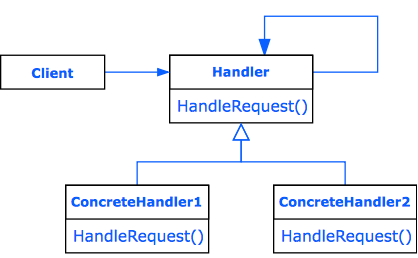
Avoid coupling the sender of a request to its receiver by giving more than one object a chance to handle the request. Chain the receiving objects and pass the request along the chain until an object handles it.Read more问题。客服部门收到大小不一的请求:小请求交给助理,较大的交给经理,很大的交给总监。如果发送请求的代码必须自己选择接收者,它就得了解每一个接收者和每一条规则。每增加一个接收者,都要修改发送者。 思路。这些接收者称为处理者,它们按固定顺序排列,这就是链。发送者只把请求交给第一个处理者。每个处理者检查请求是否归自己处理。如果是,处理者完成工作,请求不再往下传。如果不是,处理者把请求传给下一个。发送者不知道哪个处理者会作答,也不知道是否会有处理者作答。 如何阅读示例。几个处理者连成一条链。每个处理者按自己的规则判断请求是否归自己处理。客户端代码发送几个请求,每次都发往链的起点。每个请求沿着链传递,直到某个处理者接受它。在大多数语言中,每个处理者都持有下一个处理者的引用;在某些语言中,链只是一个按顺序检查的普通列表。有些示例还会发送一个没有任何处理者接受的请求,输出会报告这一点。 何时使用。当多个对象都可能处理某个请求,而这些对象的集合或顺序可能变化时,使用责任链模式。接收者始终不变时不要使用它:直接调用更简单,也更容易理解。 常见错误。忘记链的末端。这样,没有任何处理者接受的请求就会悄无声息地丢失。应事先决定末端如何处理:报错、交给默认处理者,或者给出明确的报告。 |